
The Secret to a Powerful, Fluid Golf Swing
The perfect golf swing is a beautiful, intricate dance of power and precision. It’s a kinetic chain of motion that, when executed correctly, looks effortless. But let’s be honest, for many of us, it often feels more like a clumsy stumble. We spend hours on the range, a small fortune on new gear, and yet that elusive fluid motion remains just out of reach. What if I told you the key to unlocking your best game might not be in a new driver, but in something far more fundamental: your body’s flexibility and range of motion?
I remember a client who was a regular at his club. He was a decent player, but he always talked about his “bad back” and how it limited his follow-through. He’d say, “If I could just get a little more turn, I’d be hitting it 20 yards further.” He’d stretch on his own, a few toe touches here and there, but nothing ever really changed. His story is a common one, and it perfectly illustrates the central problem: a stiff body can’t produce a dynamic swing.
This is where assisted stretching for golfers comes into play. It’s not just about touching your toes; it’s a strategic, professional tune-up for your body. We’re going to dive deep into how this simple yet profound practice may transform your game, from adding yards to your drive to keeping you on the course for years to come. So, grab a coffee, get comfortable, and let’s talk about how to finally get that swing you’ve always dreamed of.
What is Assisted Stretching, and How is It Different from Regular Stretching?
You’ve probably heard about the benefits of stretching before a round, and maybe you even do a few of your own warm-ups. But practitioner-assisted stretchingis a different beast entirely. Think of it less as a warm-up and more as a professional, hands-on session designed to unlock your body’s full potential.
Regular stretching, which we often perform on our own, is limited by our own strength and flexibility. It’s effective for maintaining a baseline level of mobility but has a limited capacity for making significant gains. Assisted stretching, on the other hand, involves a trained professional – a stretch therapist, physical therapist, or similar practitioner – who helps you deepen stretches you couldn’t achieve on your own. They apply controlled, gentle pressure to take your muscles and joints safely to their maximum range of motion.
This guided approach is far more effective for several reasons:
- Deeper, Targeted Stretch: A practitioner can help you reach a deeper stretch in key areas like the hips, shoulders, and back, which are crucial for a powerful golf swing. By identifying and focusing on your specific areas of tightness or imbalance, they can create a personalised routine that addresses the root causes of your swing limitations.
- Enhanced Relaxation: When a professional is doing the work, your muscles can relax more completely. This is a key advantage because when you stretch on your own, your muscles are often subtly contracting to hold the position, which can limit the effectiveness of the stretch.
- Proprioceptive Neuromuscular Facilitation (PNF): Many assisted stretching techniques use PNF, a method that involves contracting and relaxing a muscle to achieve a greater range of motion. It’s a scientifically supported way to improve flexibility and is difficult to do effectively on your own (Sharman et al., 2006). A practitioner can apply the perfect amount of resistance to facilitate this neurological response, allowing your muscles to lengthen safely and effectively.
The main difference? It’s the difference between doing a few push-ups at home and working with a personal trainer who guides you to perfect form and helps you push past your own limits. Assisted stretching provides a level of precision and depth that you simply can’t achieve alone, making it a critical tool for any serious golfer.
How Does Assisted Stretching Improve Golf Swing Mechanics and Power?
A golf swing is not just about brute strength; it’s about a kinetic chain – a coordinated sequence of movements that transfers energy from the ground up through your body and into the clubhead. A tight muscle or a restricted joint is like a kink in a garden hose, disrupting that vital flow of energy. Assisted stretching techniques are designed to iron out those kinks and restore the natural rhythm of your swing.
Research studies have highlighted the importance of flexibility and strength for golf performance. Researchers found a significant positive correlation between hip and torso flexibility and club head speed (Sell et al., 2007; Gordon et al., 2009; Joyce, 2017; Marshall & Llewellyn, 2017). This makes intuitive sense: a greater range of motion in your hips allows for a more complete backswing, which stores more potential energy. Similarly, more thoracic spine rotation means you can coil more effectively, creating powerful torque.
Let’s break down the mechanics and the physiological principles at play:
- Increased Hip and Pelvic Rotation: The hips are the engine of the golf swing. Tight hip flexors, a common issue for those who sit for long periods, can restrict your backswing and make it difficult to clear your hips on the downswing. Assisted hip stretchescan increase this range, allowing for a bigger turn and a more powerful, stable follow-through. By addressing tightness in the hip rotators and gluteal muscles, a professional can improve the efficiency of your downswing, allowing you to generate more power with less effort.
- Enhanced Thoracic Mobility: The thoracic spine (mid-back) is where most of the rotational movement in your swing should come from. If it’s stiff – often due to poor posture – your lumbar spine (lower back) often compensates, leading to pain and a less efficient swing. Back stretches assisted by a professional can improve this crucial rotation. A limited range of motion in the thoracic spine forces the body to create rotation elsewhere, typically in the lower back, which is not designed for such twisting movements. This is a primary driver of golf-related back pain (Gluck et al. 2008; Rouillon & Rouch, 2016; Edwards et al., 2020). By improving thoracic rotation, you protect your lower back and enhance your ability to coil.
- Shoulder and Chest Flexibility: Tight chest and shoulder muscles, particularly the pectorals and latissimus dorsi, can limit the length and width of your backswing. This forces your arms to do all the work, leading to a loss of power and inconsistent strikes. By focusing on shoulder stretching with a practitioner, you can create a wider arc, increasing club head speed and control. The goal is to allow your arms to swing freely while staying connected to your core, a hallmark of a great swing.
- Core Stability: A strong and flexible core is the vital link between your upper and lower body. Core stretching assisted sessions can help lengthen and strengthen these muscles, improving stability throughout the swing and preventing energy leakage. Without core flexibility, the powerful forces generated by your hips and legs cannot be efficiently transferred to your upper body and the club.
This table illustrates how improved mobility in key areas directly translates to better golf mechanics and, ultimately, a better game:
| Area of Flexibility | Physiological Impact | Impact on Golf Swing Mechanics | Resulting Benefit |
| Hips | Increased range of internal/external rotation | Greater rotation in backswing and follow-through | Increased swing speed, more power and distance |
| Thoracic Spine | Improved rotational capacity | Better coil and separation between upper/lower body | Reduced lower back strain, better sequencing |
| Shoulders & Chest | Enhanced shoulder girdle mobility | Wider backswing arc, better arm-to-body connection | More consistent ball striking, increased power |
| Hamstrings | Proper pelvic tilt and spinal alignment | Stable address position, better balance throughout swing | Improved posture, reduced risk of injury |
| Core | Enhanced rotational stability and flexibility | More efficient power transfer from lower to upper body | Better control, consistent shot shaping |
Can Assisted Stretching Help Prevent Common Golf Injuries Like Back Pain and Golfer’s Elbow?
Potentially. Injury prevention stretches are an important of a smart training regimen. Golf might not look like a high-contact sport, but the repetitive, high-speed motion of the swing places significant and asymmetrical stress on the body. This is especially true if you have pre-existing muscle imbalances or limited flexibility.
Studies have found that a lack of flexibility and poor muscle conditioning are major risk factors for golf-related injuries, with the lower back being the most common site of injury (Cole & Grimshaw, 2016). Other prevalent issues include golfer’s elbow (medial epicondylitis), shoulder rotator cuff strains, and wrist injuries.
Here’s a deeper look into the mechanisms by which assisted stretching can help:
- Reduces Muscle Imbalances: The golf swing creates a lopsided demand on your body. The dominant side of your core and back contracts powerfully while the non-dominant side stretches. Over time, this can lead to significant muscle imbalances and tightness. A practitioner can identify these imbalances and use targeted stretches to restore balance, which reduces compensatory movements and the risk of injury.
- Improves Joint Health: Stretching helps to improve the lubrication of joints and the flexibility of the surrounding ligaments and tendons. This can make them more resilient to the repetitive stress of the swing, which is a key factor in conditions like golfer’s elbow and shoulder impingement. A flexible joint is a resilient joint.
- Enhances Recovery: Regular stretching may help reduce muscle soreness and stiffness after a round. By promoting blood flow to the muscles, it helps flush out metabolic waste and brings in fresh, oxygenated blood, which is crucial for muscle repair (Jamtvedt, et al., 2009). This is where assisted stretchingbecomes beneficial, allowing you to bounce back faster and more effectively.
- Promotes Proper Form: When your body has the necessary range of motion, you’re more likely to execute the swing with proper, biomechanically sound form. This reduces the risk of injury by taking the load off of vulnerable areas. For example, if your hips can’t rotate, your lower back will be forced to, which is a recipe for pain. By addressing tightness in key areas, assisted stretching allows the body to move as it was designed to.
By addressing the root causes of these injuries – namely, tightness and poor mobility – assisted stretching offers a proactive, rather than reactive, approach to staying healthy and playing the game you love.
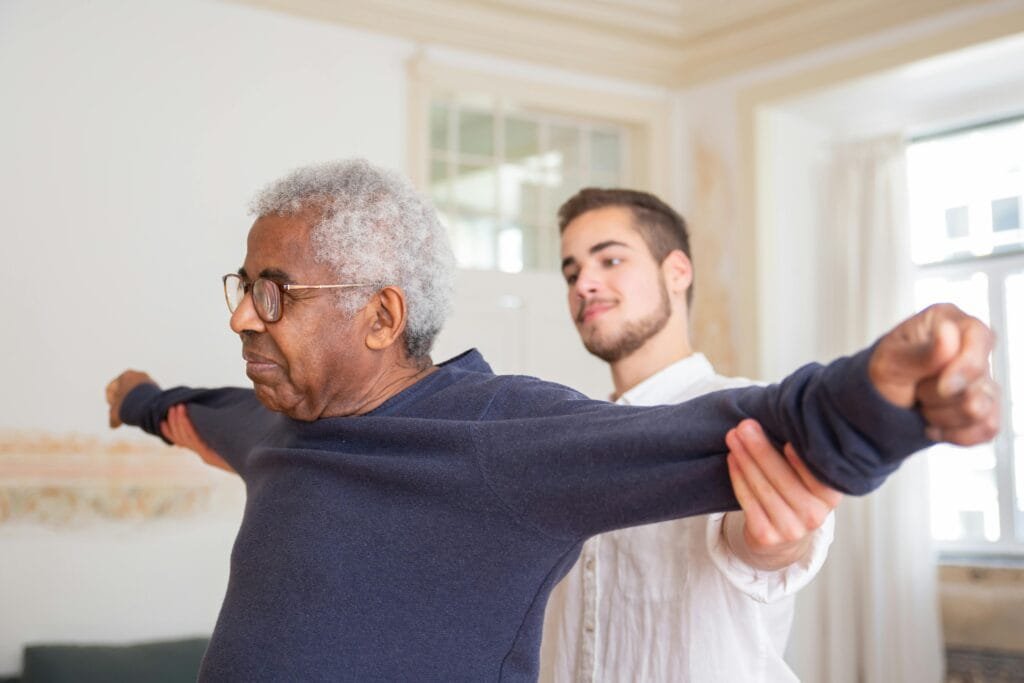
Is Assisted Stretching Safe and Effective for Senior Golfers?
Absolutely. In fact, assisted stretching is often particularly beneficial for senior golfers. As we age, our muscles and connective tissues naturally lose some of their elasticity, a process known as fibrosis. This is compounded by a loss of skeletal muscle mass, strength and function (sarcopenia) and a general reduction in physical activity. The result is a decrease in range of motion, which can lead to a less powerful swing, a higher risk of injury, and a reduction in overall enjoyment of the game.
Assisted stretching provides a safe and controlled way to combat these natural changes. A trained professional can work with a senior golfer to gently and gradually improve flexibility without putting undue stress on the joints.
Key benefits for senior golfers include:
- Improved Balance and Stability: With better flexibility and a more stable core, senior golfers can maintain a more stable base throughout the swing, which is essential for consistent ball striking and reducing the risk of falls. Studies have demonstrated that flexibility training can lead to significant improvements in balance in older adults (Bird et al., 2009; Albino et al., 2012; Seco et al., 2013).
- Pain Management: Many senior golfers suffer from chronic conditions like arthritis or general back pain. Targeted stretching can help alleviate some of this discomfort by improving joint mobility and reducing muscle tension. This can make the game much more enjoyable and less of a physical chore.
- Increased Longevity in the Game: The number one reason golfers stop playing is injury or physical limitations. By improving flexibility and reducing the risk of injury, assisted stretching can help senior golfers continue to enjoy the game for years to come.
- Tailored Approach: A professional can adapt the stretches to accommodate any pre-existing conditions or physical limitations, ensuring the session is safe and effective. They can help with both static stretchingto improve flexibility and dynamic stretchingto be used as a pre-round warm-up.
How Often Should I Schedule Assisted Stretching Sessions to See Lasting Benefits?
Consistency is key when it comes to improving flexibility and mobility. While a single session will feel great and provide some immediate relief, it’s the cumulative effect that truly transforms your body. Think of it like going to the gym; you don’t see results after one workout.
For most golfers, a good starting point is one to two sessions per week. This frequency allows the body to adapt to the new ranges of motion and helps maintain the gains between sessions. Over time, as your flexibility improves and you achieve your goals, you might be able to reduce the frequency to a maintenance schedule of one session every other week.
However, the ideal frequency can depend on several factors:
- Your Current Flexibility: If you’re particularly tight, more frequent sessions might be needed initially to make significant progress.
- Your Golfing Frequency: If you’re playing or practicing several times a week, your muscles are under constant stress. More frequent sessions can help with recovery and injury prevention.
- Your Personal Goals: Are you aiming for a specific increase in club head speed, or are you simply trying to manage chronic back pain? Your goals will influence the frequency and intensity of your sessions.
A consistent stretching program over several weeks is necessary to achieve lasting increases in flexibility. Research consistently demonstrates that structured stretching programs over several weeks produce lasting increases in joint flexibility (Baranda & Ayala, 2010; Becerra-Fernández et al., 2020). This reinforces the idea that regular, planned sessions are far more effective than sporadic stretching. It’s about building a habit, not just a one-off treat. For a personalised recommendation, it’s always best to consult with a professional who can assess your specific needs and goals.
What Can I Expect in a Typical Assisted Stretching Session?
Walking into your first assisted stretching session can feel a bit like stepping into the unknown, but there’s really nothing to worry about. A typical session is a relaxing and empowering experience that often feels like a hybrid between a massage and a personal training session.
Here’s a breakdown of what you can expect:
- Initial Consultation: The session begins with a brief chat about your goals, any current pain or injuries you have, and the specific areas you want to work on. This is your chance to discuss your golf game and what you feel is holding you back.
- Assessment: The practitioner will likely perform a quick assessment to identify your current range of motion and pinpoint areas of tightness. They might have you perform a few simple movements, such as a squat or a torso rotation, to see where you’re restricted.
- The Stretching: You’ll lie on a comfortable massage table or a mat, and the practitioner will gently move your limbs and body through a series of stretches. They will apply a controlled amount of pressure to help you deepen the stretch. Communication is key here, and they will constantly be checking in with you to ensure you’re comfortable. You are always in control of the session, and the practitioner will never push you into a painful position.
- Targeted Focus: The session will likely focus on the muscle groups most vital for a golf swing, such as the hips, hamstrings, back, shoulders, and chest. The practitioner will use techniques like PNF to help you achieve new levels of flexibility that are critical for your swing mechanics.
- Post-Session Feedback: At the end of the session, you’ll typically feel a sense of relief and improved mobility. The practitioner might provide you with some advice on how to maintain your flexibility between sessions.
The beauty of this process is that it is entirely customised. The practitioner adjusts their techniques and pressure based on your body’s response. It’s an active partnership, and you are always in control.
Does Assisted Stretching Cause Pain, and How Is It Customized to Individual Comfort?
The short answer is no, it shouldn’t cause pain. A professional assisted stretching session should feel like a deep, satisfying stretch, not a painful one. The phrase “no pain, no gain” is outdated and, in this context, simply wrong. Pain is your body’s signal that something is being overstretched or injured, and a good practitioner will always work within your comfort zone.
A professional stretch therapist’s primary goal is to increase your range of motion safely and effectively. They achieve this through constant communication and a deep understanding of human anatomy.
Key ways a session is customized to you:
- Constant Feedback: The practitioner will regularly ask you for feedback on how the stretch feels. Words like “comfortable,” “deep,” or “too much” are your tools to guide the session. This open dialogue ensures the session is always tailored to your specific needs on that day.
- Adjusting Pressure: They use their knowledge and experience to apply just the right amount of pressure. They will never force a stretch beyond what your body is ready for. The goal is to gently persuade a muscle to lengthen, not to force it.
- Gradual Progress: Flexibility isn’t built in a day. The practitioner will work with you to make gradual, sustainable progress over time, ensuring your muscles and connective tissues have time to adapt.
- Addressing Injuries and Conditions: If you have a specific injury or a chronic condition, the practitioner will adapt the stretches to avoid that area or work around it safely. This is where their expertise truly shines.
By listening to your body and working with a qualified professional, you can achieve remarkable improvements in flexibility without any of the risks associated with forceful or improper stretching.
Can Assisted Stretching Help Speed Up Recovery After a Round of Golf or Injury?
Yes. Assisted stretchingis a powerful tool for post-round rejuvenation. Research demonstrates that assisted stretching provides significant benefits for recovery and functional improvement across various populations (Neblett, 2003; Stanziano, 2009; Dai & Luo, 2022). After a demanding round of golf, your muscles are often tight and have micro-tears, which is a normal part of muscle use and growth.
Here’s how assisted stretching helps with recovery:
- Improved Circulation: Gentle stretching increases blood flow to the muscles, which helps deliver oxygen and nutrients needed for repair while also flushing out metabolic waste products like lactic acid. This may significantly add to reducing post-round soreness.
- Reduced Muscle Soreness: By lengthening and relaxing tight muscles, stretching may help prevent or alleviate delayed onset muscle soreness (DOMS). This can mean the difference between feeling stiff and sore the next day and being ready for another round.
- Restoring Range of Motion: A round of golf often leaves your body feeling stiff and restricted, especially in the core and hips. A post-round stretching session can help restore your full range of motion, preparing you for your next game or practice session.
- Mental Relaxation: The physical relaxation that comes from a good stretch session also has a profound mental effect, helping you de-stress and unwind after a competitive round.
If you are recovering from a golf-related injury, assisted stretching can be an important part of your rehabilitation plan. It’s important to note, however, that stretching for injury recovery should always be done under the guidance of a healthcare professional, such as a physiotherapist, to ensure it is safe and appropriate for your specific condition.

The Role of Assisted Stretching in a Comprehensive Golf Fitness Plan
An outstanding golf game isn’t built on one single practice; it’s a culmination of a smart, well-rounded fitness plan. Assisted stretching is not a magic bullet, but a powerful and essential component that complements other forms of training. Think of it as the foundational layer that makes all your other efforts more effective.
For instance, you might be dedicated to dynamic stretchingas a warm-up before a round, and that’s excellent for preparing your muscles. However, to truly increase your long-term flexibility, static stretchingafter a session, particularly with a practitioner’s help, is crucial. It’s about having the right tool for the right job.
Here’s how assisted stretching fits into the bigger picture:
- Complementing Strength Training: Building strength, especially in your core and glutes, is vital for golf. However, without adequate flexibility, that strength can be locked up. Assisted stretching helps ensure your muscles are long and pliable, allowing you to use that strength through your full, powerful range of motion.
- Enhancing Your Warm-Up: A good warm-up should include dynamic movements to prepare your body for the task ahead. An assisted stretching session can be the perfect pre-season tune-up or a regular weekly session that ensures your body is primed for your more active warm-ups before each round.
- Improving Posture: Many of us, particularly those with a desk job, develop poor posture, which can significantly hinder a golf swing. Assisted stretching can target the muscles that pull your shoulders forward and tighten your chest, helping to restore a more upright, powerful posture.
For those looking to explore different avenues for improving their game, the StretchMasters® blog offers valuable insights, such as articles on dynamic vs. static stretching and the benefits of stretching for desk workers, which can be highly relevant for golfers who spend a lot of time sitting.
Conclusion: Unleash Your Best Golf Swing
The quest for a perfect golf swing is a journey of continuous improvement, and the a-ha moment for many golfers comes when they realise that the body is just as important as the club. By incorporating assisted stretching to improve golf swing into your routine, you are not just getting a deeper stretch; you are making a strategic investment in your game, your health, and your longevity on the course.
We’ve explored how this targeted approach can:
- Enhance swing mechanics and power by unlocking your body’s potential.
- Act as a powerful tool for preventing common golf injuries.
- Accelerate recovery, so you can play more and feel better.
- Provide a safe and effective way for golfers of all ages and abilities to improve their game.
If you’re ready to stop fighting with a stiff body and start enjoying the effortless power of a fluid swing, it might be time to book a session. The team at StretchMasters® can help golfers unlock their full potential and offer specialised services to help you address your specific needs. Why not take the first step towards a better game today?
| FAQs | Key Takeaway |
| What is assisted stretching? | A professional guides you to deeper, more effective stretches than you can do on your own. |
| How soon will I notice improvements? | Some improvements in mobility can be felt immediately, but lasting changes take consistent sessions. |
| Which muscles should I focus on? | The hips, thoracic spine, and shoulders are critical for a powerful, injury-free swing. |
| Is it safe for senior golfers? | Yes, it’s a very safe and effective way for seniors to maintain mobility and reduce injury risk. |
| How often should I do it? | 1-2 times per week is a good starting point for most golfers to see lasting benefits. |
Other related blog articles that may be of interest.
- The Best Assisted Stretching Techniques for Cyclists
- How to Use Assisted Stretching to Enhance Your Pilates Practice
- The Best Assisted Stretching Techniques for Martial Artists
References
- Albino, I. L. R., Freitas, C. D. L. R., Teixeira, A. R., Gonçalves, A. K., Vieira dos Santos, A. M. P., & Bós, Â. J. G. (2012). Influência do treinamento de força muscular e de flexibilidade articular sobre o equilíbrio corporal em idosas. Revista Brasileira de Fisioterapia, 16(1), 55-62. https://doi.org/10.1590/S1809-98232012000100003
- Baranda, P. S. de, & Ayala, F. (2010). Chronic flexibility improvement after 12 week of stretching program utilizing the ACSM recommendations: Hamstring flexibility. International Journal of Sports Medicine, 31(6), 389–396. https://doi.org/10.1055/s-0030-1249082
- Becerra-Fernández, C. A., Mayorga-Vega, D., & Merino-Marban, R. (2020). Effect of Physical Education-based stretching programs on hamstring extensibility in high school students: A systematic review (Efecto de los programas de estiramiento en Educación Física sobre la extensibilidad de la musculatura isquiosural en estudiantes de Educación Secundaria: Una revisión sistemática). Cultura, Ciencia y Deporte, 15(43), 63–73. https://doi.org/10.12800/ccd.v15i43.1400
- Bird, M.-L., Hill, K., Ball, M., & Williams, A. D. (2009). Effects of resistance- and flexibility-exercise interventions on balance and related measures in older adults. Journal of Aging and Physical Activity, 17(4), 444–454. https://doi.org/10.1123/japa.17.4.444
- Cole, M. H., & Grimshaw, P. N. (2016). The biomechanics of the modern golf swing: Implications for lower back injuries. Sports Medicine, 46(3), 339–351. https://doi.org/10.1007/s40279-015-0429-1
- Dai, L., & Luo, T. (2022). The effects of stretching on training cyclists. Revista Brasileira de Medicina do Esporte, 29, e2022_0281. https://doi.org/10.1590/1517-8692202329012022_0281
- Edwards, N., Dickin, C., & Wang, H. (2020). Low back pain and golf: A review of biomechanical risk factors. Sports Medicine & Health Science, 2(1), 10-18. https://doi.org/10.1016/j.smhs.2020.03.002
- Gluck, G. S., Bendo, J. A., & Spivak, J. M. (2008). The lumbar spine and low back pain in golf: A literature review of swing biomechanics and injury prevention. The Spine Journal, 8(5), 778–788. https://doi.org/10.1016/j.spinee.2007.07.388
- Gordon, B. S., Moir, G. L., Davis, S. E., Witmer, C. A., & Cummings, D. M. (2009). An investigation into the relationship of flexibility, power, and strength to club head speed in male golfers. Journal of Strength and Conditioning Research, 23(5), 1606–1610. https://doi.org/10.1519/JSC.0b013e3181a3c39d
- Herbert, R. D., & Gabriel, M. (2002). Effects of stretching before and after exercising on muscle soreness and risk of injury: a systematic review. British Journal of Sports Medicine, 36(4), 288-290.
- Joyce, C. (2017). An examination of the correlation amongst trunk flexibility, x-factor and clubhead speed in skilled golfers. Journal of Sports Sciences, 35(2), 174–179. https://doi.org/10.1080/02640414.2016.1252052
- Jamtvedt, G., Herbert, R., Flottorp, S., Odgaard-Jensen, J., Håvelsrud, K., Barratt, A., Mathieu, E., Burls, A., & Oxman, A. (2009). A pragmatic randomised trial of stretching before and after physical activity to prevent injury and soreness. British Journal of Sports Medicine. Advance online publication. https://doi.org/10.1136/bjsm.2009.062232
- Marshall, K., & Llewellyn, T. (2017). Effects of flexibility and balance on driving distance and club head speed in collegiate golfers. International Journal of Exercise Science, 10(6), 954–963. https://doi.org/10.70252/yndr8824
- Neblett, R., Gatchel, R., & Mayer, T. (2003). A clinical guide to surface-EMG-assisted stretching as an adjunct to chronic musculoskeletal pain rehabilitation. Applied Psychophysiology and Biofeedback, 28(1), 59-66. https://doi.org/10.1023/A:1023814709858
- Rouillon, O., & Rouch, P. (2016, May 5). Low back pain: Biomechanics analysis and prevention. Conference Proceedings of the International Society of Biomechanics in Sports, 33. https://isbs2015.sciencesconf.org/71879/document
- Seco, J., Abecia, L. C., Echevarría, E., Barbero, I., Torres-Unda, J., Rodríguez, V., & Calvo, J. I. (2013). A long-term physical activity training program increases strength and flexibility, and improves balance in older adults. Rehabilitation Nursing, 38(1), 37–47. https://doi.org/10.1002/rnj.64
- Sell, T. C., Tsai, Y.-S., Smoliga, J. M., Myers, J. B., & Lephart, S. M. (2007). Strength, flexibility, and balance characteristics of highly proficient golfers. Journal of Strength and Conditioning Research, 21(4), 1166–1171. https://doi.org/10.1519/R-21826.1
- Sharman, M. J., Cresswell, A. G., & Riek, S. (2006). Proprioceptive neuromuscular facilitation stretching: Mechanisms and clinical implications. Sports Medicine, 36(11), 929–939. https://doi.org/10.2165/00007256-200636110-00002
- Stanziano, D. C., Roos, B. A., Perry, A., Lai, S., & Signorile, J. F. (2009). The effects of an active-assisted stretching program on functional performance in elderly persons: A pilot study. Clinical Interventions in Aging, 4, 115–120. https://doi.org/10.2147/CIA.S4152
Disclaimer:
The content on this blog is provided for general information and wellness purposes only. It should not be considered medical advice, diagnosis, or treatment. StretchMasters® services, including assisted stretching, are intended to support overall wellbeing and are not a substitute for professional healthcare guidance. While reasonable care has been taken in preparing and verifying the information presented in this blog, StretchMasters® makes no claims, representations, or guarantees regarding its completeness, accuracy, reliability, suitability or availability with respect to the website or the information, products, services, or related graphics contained on the website for any purpose. This content is intended for general informational purposes only and is not a scientific article. Inconsistencies, inaccuracies, or errors — including in paraphrasing and citation — may be present. Any reliance you place on such information is therefore strictly at your own risk. We strive to ensure that all information is accurate and up to date; however, due to the evolving nature of health research, we cannot guarantee that all content reflects the latest evidence. Additionally, external links shared in blog posts may change, be updated, or become inactive over time without notice. Always consult with a qualified medical professional before starting any new therapy, especially if you have existing health conditions. StretchMasters®, its parent company Skuil Ltd, and affiliated clinics accept no liability for decisions made or outcomes based on this content. Opinions expressed in individual blog posts are those of the authors and do not necessarily reflect the views or policies of StretchMasters® or its subsidiaries. Any reference to third-party organisations, websites, services, or products is not an endorsement.